
Cutting the cards
We’re used to seeing games in finished form. Ideally, every system and component interact to create a finished whole. But, lying just outside of that curated garden is a larger design space of bad ideas. I haven’t seen a lot of self-critical writing about bad game ideas and why they didn’t work out. Yet, I think failed explorations can be more illuminating of design principles than finished products. So, this post is about some of the cards tested for Bidlz that didn’t make the cut.
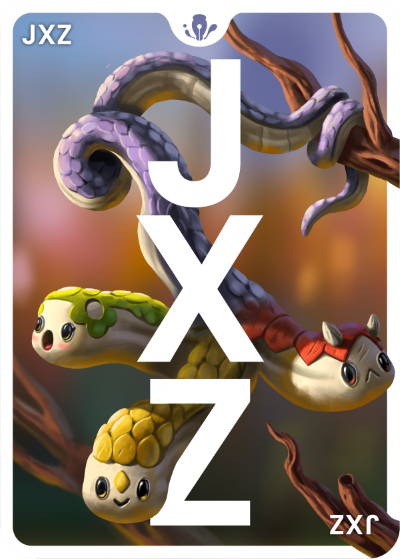
In case you aren’t familiar with Bidlz, here’s a brief rundown of the rules. Bidlz is a word-building auction game for 2-5 players. The goal of the game is to be the first to spell a five-or-more letter word. Cards are auctioned from the deck one at a time using a Vickrey Auction (sealed-bid, second-price). Most cards have a single letter on them. Some cards are digraphs, and one is a set of letters (J or X or Z). Non-letter cards are events or powers. One important thing to note is that powers are auctioned off, just like letters. They give some special ability to the player who owns the card. Players start with 15 coins, and additional income is distributed over the course of the game. That should be enough to understand this post, but see the rulebook for more details if you are interested.
There were more powers and events removed from the game then were included, so this post will be split up into multiple sections. For each card below, read the text and see if you can predict the reasoning behind the card and why it failed.
Five cut cards
Broker (Power)
Text: You may make trades with other players. (The counterparty must agree to the trade.)
The idea behind this card was to grant a player a monopoly on all trading (cards, coins, promises, etc). The ability to trade is an advantage of it’s own. But as a second-order consequence, they could profit by intermediating trades between other players. I thought it would be interesting to have players assign a value to this ability by auctioning it off. Early explorations of Bidlz were very “meta.”
Unfortunately, players never utilized the card after buying it. Not even once through multiple playtests. I can only guess at the reasons. One possibility is that there was no trigger in the game’s flow to indicate that it was a good time to trade. The game moves quickly from one round to the next so it was easy to forget. Additionally, the game is very sharp. It’s typical to win with about 6 cards, and possible to win with as few as 3. So, players were averse to trading unless it gave them an immediate win - since it could otherwise result in an immediate loss. This is different from games like Catan, where players cycle through several dozen cards over the series of the game and trading gives marginal value.
Whether these guesses are correct is unimportant. All that matters is player’s didn’t use it. Taking it out also made a simultaneous victory much less likely. I could imagine this power could still be interesting for another game.
Risk (Event)
Text: For this auction, everyone must pay their full bid whether they gain a card or not.
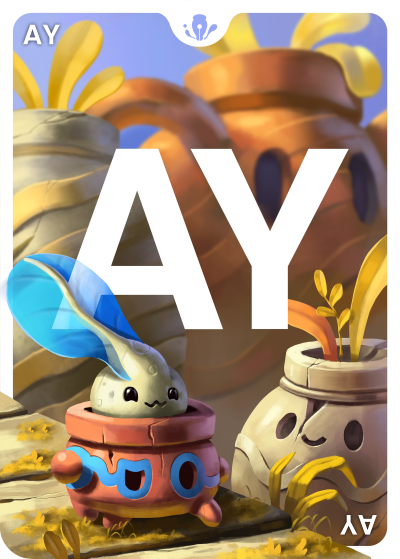
The idea behind this card was to break up the usual game flow a bit by throwing in a different auction format. It was inspired by a story of a teacher who would auction off a dollar bill with the caveat that the two highest bidders had to pay - leading to a classic war of attrition. Students would start off bidding ten cents, thinking they would pocket some easy money. But, of course someone would outbid them with twenty cents thinking they would pocket slightly less money. The first student, now in the position of either losing their original bid for nothing or increasing their bid likely does so to thirty cents. It’s not long before a they are horrified to discover they are now bidding more than a dollar each, since in the short-term it’s better to increase their bid in the hopes of losing less.
In Bidlz, the auctions happen simultaneously, so nobody ends up bidding more than they think the card is worth. Yet, the consequence of this format is that it felt similar to a “runaway victor” situation. Not only did the winner get the card, but the losers got a punished by losing money. This is the opposite of what usually happens during the game as cards get spread out evenly because either you are winning auctions or accumulating a money advantage for future auctions. The feel bad experience outweighed the interestingness of adding a curious auction format.
Loan (Power)
Text: Take 15 coins from the bank. You cannot win before returning 15 coins to this card.
Bidlz uses a second price auction, meaning that the winner pays the second highest bid rather than their own bid. As a consequence, players are engaged in every auction whether or not they want the prize because they need to make sure that their opponents pay as much as possible. But, to do that you need liquidity. In theory, a loan could be used to bully other players and rarely miss a good deal on a card.
In practice, players assigned this card no value because they feared that even if they secured the cards they needed they would be unable to pay off the loan. In the end, Bidlz ended up a family-weight game. So, maybe trying to include financial instruments was too lofty a goal.
Trash (Power)
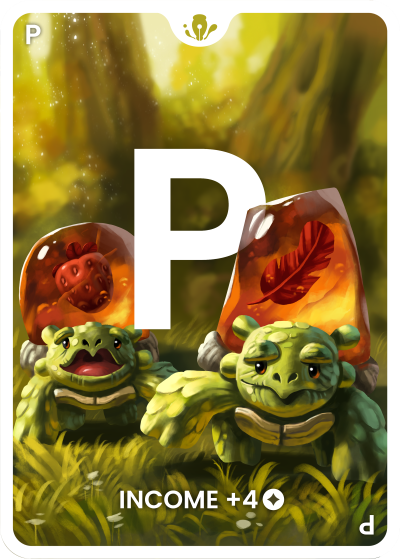
Text: Discard the card up for auction. Then discard this.
The idea here was that sometimes a letter would come up that you didn’t want and an opponent did. You could deny your opponent an opportunity to win.
Players did not value this card as worth bidding for compared to a letter.
Gank (Power)
Text: Steal a card from another player, then discard this.
This card was funny in that whenever it wasn’t included players would ask if I could add a card that would steal from other players. When it was included players hated it. It’s a big feel bad for the player who is stolen from. Any “take that” mechanic for this game should instead target all players.
Conclusion
One of the defining features of game design with interesting systems is that the system and component interactions often lead to surprise. This can be delightful, but it can also be frustrating because it means sometimes things won’t work as the game designer intended. That’s why game design is an iterative process.
Stay tuned for part two, which will go over more cards cut from Bidlz. If you thought this was interesting, you might like to try the game. Please sign up for a notification of release on our homepage.
